
PuroAir Air Purifier Review and Best Amazon Alternatives 2026
Finding the right air purifier can feel overwhelming when you want clean air for your family. You see dozens of brands making big promises about removing dust, pollen, and smoke.
The PuroAir brand has gained massive attention on Amazon recently. This comprehensive review explores what makes PuroAir air purifiers popular and reveals the best alternatives available on Amazon today.
Clean indoor air matters more than ever. Allergens, pet dander, smoke particles, and pollutants fill your home daily.
Key Takeaways:
- The PuroAir 240 covers up to 1,000 square feet and filters 99.9% of airborne pollutants including dust, pollen, smoke, and pet dander through its HEPA filtration system
- Price point sits at $159 on Amazon with over 14,700 customer reviews averaging 4.6 stars, making it a popular choice among buyers seeking large room coverage
- The device features three fan speeds, auto mode, sleep mode, and a built-in air quality sensor that adjusts performance based on current air conditions
- Filter replacement costs $48 every three months, which adds approximately $192 annually to operating expenses beyond the initial purchase price
- Alternative options like Levoit Core 300 offer similar performance at lower prices ($89.99), while premium models provide enhanced features for specific needs like severe allergies or pet odors
- Independent testing reveals the PuroAir 240 takes approximately 48-51 minutes to clean a standard test room, which performs adequately but not exceptionally compared to competitors in the same price range

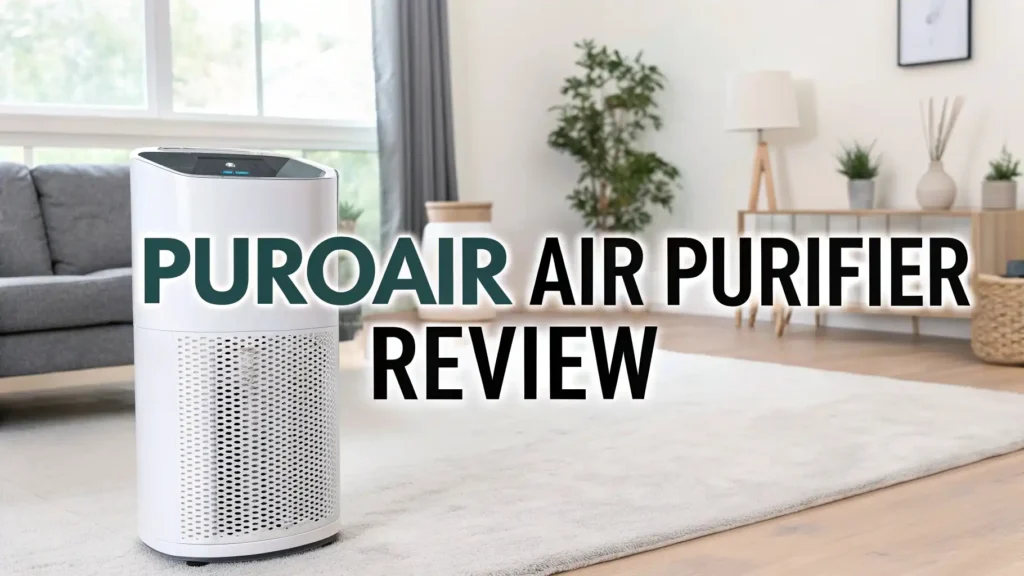
PuroAir 240 HEPA Air Purifier Overview
The PuroAir 240 represents the brand’s flagship model for home air purification. This cylindrical tower design stands 14.25 inches tall and weighs just 8 pounds. You can easily move it from room to room as needed. The sleek black finish looks modern and fits various home decor styles without standing out awkwardly.
This model targets medium to large rooms up to 1,000 square feet. Your living room, master bedroom, or open concept kitchen area all work well for this unit. The three-layer filtration system includes a pre-filter, HEPA filter, and activated carbon layer. These layers work together to capture particles as small as 0.1 microns according to the manufacturer’s claims.
The control panel sits on top of the unit with simple touch buttons. You get power on/off, fan speed selection, timer settings, and mode controls. An LED indicator light changes color based on your current air quality. Blue means good air quality, while red signals poor conditions. This visual feedback helps you understand when the purifier needs to work harder.
Energy efficiency remains decent with consumption ranging from 11.6 watts in sleep mode to 37.6 watts at maximum speed. Running costs stay reasonable even with 24/7 operation. The device operates quietly at lower speeds, measuring around 36.9 decibels. This makes it suitable for bedrooms where noise sensitivity matters most during sleep hours.
Understanding the HEPA 14 Filtration Technology
PuroAir markets their filters as HEPA 14 grade, claiming superior performance over standard HEPA 13 filters. The company states this technology removes 99.99% of particles down to 0.3 microns. These microscopic particles include common allergens like pollen, mold spores, dust mites, and pet dander that trigger respiratory issues.
The all-in-one filter design combines multiple filtration stages in a single cylindrical unit. The outer layer catches large particles like hair and visible dust. The middle HEPA layer traps smaller particles. The inner activated carbon layer absorbs odors from cooking, pets, and smoke. This integrated approach simplifies maintenance since you replace one filter instead of multiple components.
Filter replacement timing becomes important for maintaining effectiveness. PuroAir recommends changing filters every three months with regular use. Heavy use in homes with multiple pets or smokers may require more frequent changes. The device includes a filter replacement indicator that illuminates when it’s time for a new filter. Ignoring this warning reduces purification efficiency significantly.
The HEPA 14 designation suggests medical-grade filtration capability. However, independent testing shows mixed results compared to standard HEPA 13 filters. Some tests indicate the H14 filter actually restricts airflow more than H13, potentially slowing down room air changes. The practical difference for home use remains debatable among air quality experts.
Top 3 Alternatives for PuroAir Air Purifiers


Performance Testing Results and Real World Experience
Independent testing in a 728 cubic foot test room revealed the PuroAir 240 took approximately 48-51 minutes to clear the air completely. This measurement used PM1.0 particle readings from calibrated sensors. The performance falls within acceptable ranges but doesn’t exceed competitor devices in the same price bracket.
The AHAM VERIFIDE certification provides standardized performance data. The PuroAir 240 achieved a CADR rating of 183 CFM for dust, 181 CFM for smoke, and 204 CFM for pollen. These numbers indicate moderate cleaning power. The recommended room size based on AHAM standards sits at 284 square feet for optimal air changes per hour, which differs significantly from marketing claims of 1,000+ square feet.
Auto mode functionality works reasonably well for hands-off operation. The built-in sensor detects particle levels and adjusts fan speed automatically. However, the sensor quality appears basic compared to premium models. It uses a PM1006 sensor common in budget devices. Response time to changing air quality conditions takes several minutes rather than instant adjustment.
Noise levels stay comfortable at lower speeds, making bedtime use pleasant. Speed 1 generates only 36.9 decibels, quieter than a whisper. Speed 2 at 42.2 decibels remains acceptable for most people. Maximum speed reaches 52.2 decibels, comparable to normal conversation volume. This becomes noticeable but not disruptive during waking hours when quick air cleaning matters most.
Design and Build Quality Comparison
The exterior construction feels lightweight but somewhat flimsy compared to premium alternatives. The plastic shell seems thin and hollow when tapped. Rubber feet on the bottom prevent accidental opening when moving the unit, which improves on some competitor designs. The twist-off bottom cover provides easy filter access without tools.
Control panel simplicity works well for non-tech-savvy users. Large buttons with clear icons make operation intuitive. The absence of smart features like WiFi connectivity or phone apps disappoints tech-oriented buyers. No remote control comes included. You must walk to the unit for any adjustments during use.
The cylindrical tower shape maximizes floor space efficiency. It occupies only 8.5 inches of diameter space. This compact footprint fits well in corners or beside furniture. The 360-degree air intake around the bottom pulls air from all directions. Top-mounted outlet pushes clean air upward for better room circulation patterns.
Filter design closely resembles the popular Levoit Core 300 structure. The tubular filter slides out easily with an integrated handle. However, the integrated pre-filter cannot be cleaned separately without removing the entire filter unit. This design makes routine maintenance more cumbersome than models with removable, washable pre-filters.
Cost Analysis: Initial Purchase and Long Term Expenses
The $159 price point positions PuroAir 240 in the mid-range category. This falls between budget options under $100 and premium models exceeding $300. Your initial investment covers the unit, one filter, and a basic warranty. No additional accessories come in the box beyond a user manual.
Operating expenses combine electricity and filter replacement costs. Running 24/7 at maximum speed adds approximately $40 annually to your electric bill based on average US energy rates. The three-month filter replacement schedule at $48 per filter adds $192 yearly. Total annual operating cost reaches about $232 for continuous operation.
Cost per CADR CFM provides a value metric comparing cleaning power to price. The PuroAir 240 delivers one CADR CFM for approximately $1.15. This ratio exceeds budget alternatives significantly. The Levoit Core 300 provides one CADR CFM for $0.68, offering better performance value. The Winix A230 achieves $0.64 per CADR CFM with faster room cleaning speeds.
Bundle options on Amazon sometimes offer better value. The two-pack listing at $279 reduces per-unit cost to $139.50. This works well for multi-room coverage or sharing costs with a friend. Filter subscription services through Amazon Subscribe & Save provide 5-15% discounts on replacement filters, reducing long-term expenses slightly.
Air Quality Sensor Technology and Auto Mode Features
The built-in PM sensor detects particulate matter concentrations in real-time. This sensor technology enables the color-changing LED indicator and auto mode functionality. Blue light signals good air quality below certain particle thresholds. Orange or red lights indicate elevated pollution levels requiring stronger purification efforts.
Auto mode operation adjusts fan speed based on sensor readings. When air quality degrades, the unit automatically increases to higher speeds. Once particle levels drop, it reduces to quieter, energy-efficient operation. This set-it-and-forget-it functionality appeals to users wanting passive air cleaning without constant manual adjustments.
Sensor limitations become apparent during testing. The basic PM1006 sensor found inside costs approximately $3 in bulk manufacturing. This budget-grade component provides less accuracy than premium laser particle counters. Response time lags behind actual air quality changes by several minutes. Calibration accuracy varies between individual units.
The color indicator visibility depends on room lighting conditions. Bright daylight can wash out the LED colors, making status difficult to see from across the room. Night mode dims the lights automatically, which helps bedroom use but removes the quick visual reference. Some users prefer traditional numeric displays showing exact particle counts rather than simple color codes.
Comparing PuroAir to Levoit Core 300 and Winix Models
The Levoit Core 300 retails around $89.99 and offers similar room coverage. This popular alternative uses HEPA 13 filtration and includes multiple filter options for specific needs. The Core 300S smart version adds WiFi connectivity and app control for phone-based operation. Build quality feels more solid despite the lower price point.
Winix models like the A230 and 5500-2 provide excellent value in the budget-to-midrange category. The Winix A230 costs approximately $78 and cleans test rooms faster than the PuroAir 240. It includes a washable pre-filter that reduces ongoing maintenance costs. The PlasmaWave technology adds an extra purification layer without producing harmful ozone.
Performance differences show in real-world cleaning speed tests. The Winix A230 cleared the same 728 cubic foot test room in about 40 minutes versus 48-51 minutes for the PuroAir 240. This 11-minute difference matters when dealing with sudden smoke or odor problems. Faster air changes mean cleaner air throughout the day with fewer lingering particles.
Feature comparison reveals gaps in PuroAir’s offering at the $159 price point. The Levoit Core 300S includes smart controls, scheduling, and air quality history tracking through a phone app. The Winix 5500-2 offers a larger activated carbon filter for superior odor removal. Both alternatives provide better value propositions for similar or lower costs.
Filter Replacement Process and Maintenance Requirements
Changing the PuroAir 240 filter takes less than five minutes once you know the process. Power off the unit and unplug it for safety. Twist the bottom cover counter-clockwise to remove it. Pull the old filter straight out using the integrated handle. Insert the new filter ensuring proper alignment. Replace the bottom cover by twisting clockwise until it locks securely.
New filters arrive sealed in plastic bags for freshness. Remove all packaging including the plastic wrap before installation. A sticker on top reminds users to remove the bag, preventing a common installation mistake. Failing to remove packaging blocks airflow completely and prevents proper operation.
Pre-filter cleaning requires removing the entire filter unit. Use a soft brush or vacuum attachment to gently remove accumulated dust and hair from the outer fabric layer. This maintenance extends main filter life slightly but takes more effort than models with separate, removable pre-filters. Monthly cleaning keeps the outer layer from clogging excessively.
Filter replacement indicators simplify maintenance timing. The control panel light illuminates when the internal timer reaches approximately 2,160 hours of operation, roughly three months of 24/7 use. You can manually reset the indicator after installing a fresh filter by holding the filter reset button for several seconds. This prevents false warnings after replacement.
Room Size Recommendations and Practical Coverage
Marketing claims state coverage up to 1,115 square feet, but this requires clarification. This figure represents one air change per hour, meaning the purifier cycles through the entire room’s air volume once in 60 minutes. The EPA and air quality experts recommend minimum 4.8 air changes per hour for effective particle removal and allergen control.
Realistic room sizing based on proper air exchange rates limits the PuroAir 240 to approximately 232 square feet for optimal performance. This covers a small to medium bedroom or home office comfortably. A 10×10 foot bedroom or 15×15 foot space represents ideal use cases where the unit maintains consistently clean air throughout the day.
Ceiling height impacts total air volume significantly. Standard 8-foot ceilings create less cubic footage than 10-foot or vaulted ceilings in the same floor area. Calculate your actual room volume by multiplying length, width, and height. Larger volumes require more powerful purifiers or multiple units for adequate coverage and air change rates.
Multiple unit strategy works better for open floor plans or homes with high ceilings. Placing one PuroAir 240 in the main living area and another in the bedroom provides better coverage than a single unit trying to handle 2,000+ square feet. This distributed approach creates cleaner air zones rather than attempting whole-home purification with undersized equipment.
Noise Level Assessment for Bedroom and Living Room Use
Sleep mode operates at the lowest fan speed with dimmed indicator lights. Sound levels measure approximately 36.9 decibels, quieter than a library. This whisper-quiet operation won’t disturb light sleepers or young children during nighttime use. However, cleaning effectiveness drops significantly at minimum speed, potentially allowing particle buildup overnight.
Speed 2 operation at 42.2 decibels provides a good balance between noise and cleaning power. This level compares to soft background music or gentle rainfall. Most people find this acceptable for bedroom use while reading or relaxing. It provides reasonably effective air circulation without dominating the sound environment.
Maximum speed reaches 52.2 decibels during high-pollution periods or initial room cleaning. This noise level equals normal conversation volume or an operating dishwasher in an adjacent room. While noticeable, it doesn’t prevent normal activities like watching television or having discussions. Time-limited use at maximum speed cleans the air quickly before reducing to quieter operation.
White noise effect from the fan helps some people sleep better by masking other household sounds. The consistent airflow creates a steady background hum similar to a fan or air conditioner. Light sleepers who use white noise machines may find the purifier serves double duty for both air cleaning and sleep sound generation.
Energy Consumption and Environmental Impact
Power consumption stays minimal compared to major appliances. Sleep mode uses only 11.6 watts, less than a LED light bulb. Speed 1 draws 16 watts, speed 2 uses 23.2 watts, and maximum speed requires 37.6 watts. These low power requirements keep electricity costs negligible even with continuous 24/7 operation throughout the year.
Annual electricity cost for constant maximum-speed operation totals approximately $40 based on average US energy rates of 12 cents per kilowatt-hour. Running at lower speeds during most hours reduces this further. Smart usage patterns like high speed during waking hours and low speed overnight optimize both air quality and energy efficiency.
Environmental considerations extend beyond electricity use to filter disposal. The PuroAir 240 requires four filter changes yearly, creating solid waste. The filters contain plastic, fabric, activated carbon, and HEPA media that generally aren’t recyclable through standard programs. This generates 8-10 pounds of landfill waste annually per household using the device.
Energy Star certification doesn’t apply to this model, indicating it doesn’t meet the government’s energy efficiency standards. More efficient alternatives exist that provide similar or better cleaning performance while consuming less electricity. Eco-conscious buyers should consider both operational efficiency and filter waste when choosing between models.
Customer Reviews and Common User Experiences
Amazon ratings average 4.6 stars from over 14,700 reviews, indicating generally satisfied customers. Many users report noticeable improvements in allergy symptoms, reduced dust accumulation, and better sleep quality. Pet owners particularly appreciate the reduction in animal odor and dander circulation throughout their homes.
Negative feedback frequently mentions the high filter replacement costs and questions about actual room coverage. Some users feel misled by marketing claims of 1,000+ square foot coverage when performance seems adequate only in smaller spaces. Build quality concerns appear in multiple reviews noting flimsy plastic construction and concerns about long-term durability.
Allergy sufferers provide mixed testimonials. Many report significant symptom reduction including less sneezing, clearer sinuses, and reduced nighttime congestion. Others notice minimal difference, possibly due to using the unit in oversized rooms where air changes remain insufficient. Expectations versus reality creates satisfaction gaps among some purchasers.
Comparison shoppers who own multiple air purifier brands often rate the PuroAir 240 as adequate but overpriced. Users familiar with Levoit, Winix, or Coway products note similar or better performance from those alternatives at lower costs. The lack of smart features particularly disappoints tech-savvy consumers accustomed to app-based controls and monitoring.
Best Uses and Ideal Scenarios for PuroAir 240
Bedroom purification represents the sweet spot for this unit’s capabilities. A standard 10×12 foot bedroom with 8-foot ceilings creates approximately 960 cubic feet of air volume. The PuroAir 240 can maintain effective air change rates in this space while operating quietly enough for sleep. Place it 3-6 feet from your bed for optimal benefit without excessive noise.
Home office spaces benefit from continuous air purification during work hours. Stale air, printer emissions, and poor ventilation common in closed office rooms get addressed effectively. The quiet operation at speed 2 won’t interfere with video calls or focused work. Better air quality can improve concentration and reduce fatigue during long work sessions.
Nurseries and children’s rooms suit the PuroAir 240’s coverage area and noise profile. The child lock feature prevents curious toddlers from changing settings. Cleaner air supports developing respiratory systems and may reduce illness frequency. The night light function from the indicator LED provides subtle illumination without dedicated nightlight equipment.
Apartment dwellers appreciate the compact footprint and portability. Moving the unit between bedroom and living areas accommodates different daily needs without requiring multiple purchases. The lightweight design at 8 pounds makes relocation easy for anyone. No installation or mounting requirements provide flexibility for renters who can’t modify living spaces.
Frequently Asked Questions
Does the PuroAir 240 actually remove smoke and odors effectively?
The activated carbon layer helps absorb smoke particles and odors, but the amount of carbon in this filter remains modest. Light cooking odors and minor smoke exposure see noticeable improvement. Heavy smoke from cooking or cigarettes requires more robust activated carbon filtration found in premium models. Regular filter replacement maintains optimal odor removal performance.
How does PuroAir compare to other air purifiers in the same price range?
The PuroAir 240 delivers adequate performance but doesn’t excel compared to alternatives. The Levoit Core 300 offers similar cleaning capability for $70 less. The Winix A230 cleans faster at $78. For the $159 price point, several competitors provide better value through superior performance, additional features, or lower operating costs.
Can I use generic replacement filters instead of branded PuroAir filters?
Generic HEPA 13 replacement filters fitting the PuroAir 240 dimensions cost approximately $40 per year instead of $192 for official filters. These alternatives typically provide similar performance for basic particle filtration. However, quality varies between generic manufacturers. Official filters include warranty protection and guaranteed compatibility, while third-party options carry some risk.
What size room can the PuroAir 240 actually handle effectively?
Despite marketing claims of 1,000+ square feet, effective performance occurs in rooms up to 232 square feet based on recommended air change rates. This covers bedrooms up to roughly 15×15 feet with standard ceilings. Larger spaces experience reduced air quality improvements due to insufficient air circulation and processing capacity for the space volume.
Is the PuroAir 240 worth the price compared to cheaper options?
The PuroAir 240 provides acceptable performance but questionable value at $159. Budget alternatives like the Winix A230 at $78 or Levoit Core 300 at $89.99 offer comparable or better air cleaning for significantly less money. The premium price doesn’t correspond to premium features, performance, or build quality that justify the cost difference for most buyers.
How often do I really need to replace the filters?
Official recommendations suggest three-month filter replacement with regular use. Actual lifespan depends on your environment, usage patterns, and air quality. Homes with pets, smokers, or high outdoor pollution may need more frequent changes. The filter indicator provides guidance, but visual inspection of filter condition offers better replacement timing. Heavily soiled filters restrict airflow and reduce effectiveness noticeably.
Does the PuroAir 240 produce ozone or harmful byproducts?
The PuroAir 240 uses mechanical HEPA filtration without ionization or UV technology that can generate ozone. This makes it safe for continuous use without concerns about creating secondary pollutants. The activated carbon remains inert and doesn’t release chemicals during normal operation. Standard HEPA technology provides effective purification without producing harmful byproducts.