
AquaTru Countertop Water Purifier Review: Worth Your Money?
Clean drinking water should never be a luxury. You turn on your tap and wonder what exactly is flowing into your glass. Chlorine? Lead? Those scary forever chemicals you keep hearing about on the news?
The AquaTru Countertop Water Purifier promises to tackle these concerns without the headache of complicated installations or plumbing nightmares.
We’ll explore how it works, what makes it different from other options, and whether it’s the right choice for your home and family.
Key Takeaways:
- No plumbing required means true convenience. You simply plug it in, fill the tank with tap water, and the system does all the work. This makes it perfect for renters, RV owners, or anyone who doesn’t want to modify their kitchen plumbing.
- Four-stage reverse osmosis removes 84 contaminants. The system targets everything from PFAS (forever chemicals) and lead to fluoride, chlorine, and microplastics. You get bottled water quality right from your countertop.
- Multiple models fit different needs and budgets. Choose from the Classic model, Carafe version with glass container, or Alkaline models that add healthy minerals back into your water. Prices range from around $300 to $436 depending on features.
- Filter replacement is straightforward but necessary. You’ll need to change filters every six months to two years depending on the stage. The system typically alerts you when it’s time, and replacement filters are readily available on Amazon.
- Investment pays off compared to bottled water. While the upfront cost seems high, families spending $50 or more monthly on bottled water will recover their investment within months while reducing plastic waste.

AquaTru Classic Countertop Water Purifier
The AquaTru Classic represents the flagship model in their countertop lineup. This system brings professional-grade water purification to your kitchen without requiring any installation expertise.
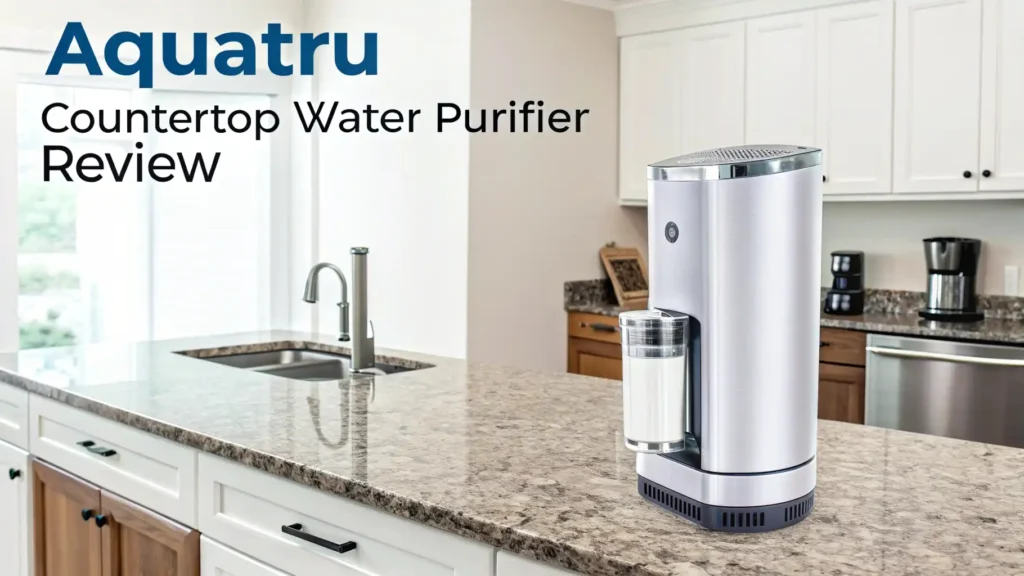
The unit stands about 15 inches tall and fits comfortably on most countertops without dominating your valuable kitchen space. Its sleek white design blends seamlessly with modern appliances and doesn’t scream “water filter” like some bulky alternatives.
What sets this model apart is its certified four-stage reverse osmosis process. Stage one uses a mechanical pre-filter that catches sediment, rust particles, and larger contaminants. Stage two employs an activated carbon filter that removes chlorine and improves taste.
The third stage is where the magic happens with the reverse osmosis membrane that blocks contaminants down to 0.0001 microns.
Finally, stage four uses a VOC carbon filter for final polishing. This thorough process means you’re getting water that’s actually cleaner than most bottled water brands.
AquaTru Carafe Countertop Water Purifier

The Carafe model offers a more compact solution for smaller households or those with limited counter space. This version comes with an elegant glass carafe that holds purified water instead of a plastic tank.
Many users prefer glass because it doesn’t retain odors or flavors and looks more sophisticated sitting on your counter or dining table.
Despite its smaller footprint, the Carafe doesn’t compromise on purification power. It uses the same four-stage reverse osmosis technology as the Classic model.
You still get removal of 84 contaminants including PFAS, lead, fluoride, and microplastics. The difference lies primarily in capacity and design rather than performance.
This model works wonderfully for individuals, couples, or small families. The glass carafe holds enough purified water for daily drinking while the more compact design saves precious counter space in apartments or smaller kitchens.
AquaTru Carafe Alkaline Countertop Water Purifier

The Carafe Alkaline model adds an important fifth stage to the purification process. After removing contaminants through reverse osmosis, this system adds beneficial minerals back into your water.
The alkaline filter introduces calcium, magnesium, and potassium, creating water with a slightly alkaline pH between 7.5 and 9.
Why does this matter? Regular reverse osmosis removes virtually everything from water, including beneficial minerals. Some people find pure RO water tastes flat or notice it’s slightly acidic.
The alkaline stage addresses both concerns by restoring a mineral profile similar to natural spring water. This not only improves taste but also provides trace minerals your body needs.
The glass carafe design remains the same as the standard Carafe model, offering that premium look and feel. Users who choose this version typically care about both purity and mineral content.
Top 3 Alternatives for AquaTru Countertop Water Purifier


How the Four-Stage Reverse Osmosis System Works
Understanding the technology behind AquaTru helps you appreciate what you’re getting. Reverse osmosis uses pressure to force water through semi-permeable membranes, removing contaminants at the molecular level.
This process has been used by water treatment facilities for decades and is considered the gold standard for water purification.
Stage one tackles visible particles and sediment. Your tap water contains rust, sand, silt, and other particles you can sometimes see.
The mechanical pre-filter catches these larger contaminants before they can clog the more delicate filters downstream. This filter extends the life of your more expensive RO membrane.
Stage two focuses on chemicals and taste. The activated carbon filter absorbs chlorine, which most municipalities add to tap water. It also removes volatile organic compounds and chemicals that affect taste and smell. After this stage, your water already tastes noticeably better.
What Contaminants Does AquaTru Actually Remove
The claim of removing 84 contaminants sounds impressive, but let’s examine what this actually means for your health. PFAS, known as forever chemicals, are among the most concerning modern contaminants.
These industrial chemicals don’t break down naturally and have been linked to various health issues. AquaTru’s reverse osmosis membrane effectively blocks these molecules.
Heavy metals represent another serious concern. Lead can leach from old pipes, and even low levels pose risks especially to children.
The system removes over 99% of lead, copper, mercury, and arsenic. If you live in an older home or area with questionable water infrastructure, this protection offers genuine peace of mind.
Pharmaceutical residues increasingly appear in tap water as medications enter the water supply through various pathways.
While present in trace amounts, many people prefer not to consume these compounds. Reverse osmosis removes most pharmaceutical residues that standard filtration misses.
Installation and Setup Process
One of AquaTru’s biggest selling points is how simple it is to start using. You literally just take it out of the box, remove packaging, and plug it in.
There’s no drilling, no connecting to water lines, and no tools required. The entire setup takes about five minutes even if you’re not particularly handy.
The system arrives with filters already installed, which saves you the hassle of figuring out which filter goes where.
You simply fill the top tank with tap water and press the power button. The unit automatically begins the purification process, and you’ll hear it working as water passes through the stages.
The first batch of water should be discarded as it flushes the system. After that, you have fresh purified water ready to drink.
The clean water tank holds several liters, so you’re not constantly waiting for the system to produce more water. Most families find they fill the input tank once or twice daily.
Filter Replacement Schedule and Costs
No water filter lasts forever, and understanding replacement schedules helps you budget appropriately.
The pre-filter needs replacement approximately every six to twelve months depending on your water quality and usage. This filter costs around $30 to $40 and is the most frequently changed component.
The activated carbon filters typically last twelve to eighteen months. You’ll notice when they need replacement because water production may slow or taste may change slightly. The system includes helpful indicator lights that alert you when filters are nearing the end of their lifespan.
The reverse osmosis membrane represents the most expensive component but also lasts the longest. With proper maintenance and regular pre-filter changes, the RO membrane can last up to two years. This filter costs between $80 and $120 depending on where you purchase it.
The final VOC carbon filter matches the lifespan of the other carbon filter at twelve to eighteen months.
Total annual filter costs typically run between $150 and $200 for most households. While this seems expensive, consider that a family spending $50 monthly on bottled water pays $600 annually while generating significant plastic waste.
Taste and Water Quality Comparison
The real test of any water purification system comes down to taste and actual performance. Users consistently report that AquaTru water tastes cleaner and crisper than their tap water.
The removal of chlorine alone makes a dramatic difference, eliminating that swimming pool taste many municipal water supplies have.
Compared to bottled water, most people find AquaTru water equal or superior in taste. Premium bottled water brands often use reverse osmosis anyway, so you’re essentially creating the same product at home.
Some users note that the water tastes very pure, which can seem unusual if you’re accustomed to mineral-rich water.
The alkaline models address the pure taste by adding minerals back. Water from the alkaline versions tastes more like natural spring water with a smooth, slightly sweet quality that many prefer. The added minerals provide a fuller taste profile without any unpleasant flavors.
Testing your water before and after AquaTru provides objective evidence of improvement. Many users purchase TDS (total dissolved solids) meters to measure results.
Energy Consumption and Operating Costs
Beyond filter replacements, you should consider the ongoing electrical costs of running AquaTru. The system uses approximately 24 watts during operation, which is comparable to a laptop computer. It only runs when actively purifying water, not continuously.
Most households find the system operates a few hours daily depending on water consumption. Monthly electrical costs typically add up to just $2 to $4, making this a negligible expense in the overall operating budget. The energy efficiency means you’re not dealing with a power-hungry appliance.
Water waste is another consideration with reverse osmosis systems. AquaTru wastes less water than many competitors but still produces some wastewater as part of the RO process.
The ratio is approximately 1:1, meaning for every gallon of pure water, about one gallon goes to drain. This is actually excellent compared to under-sink RO systems that often waste 3 to 5 gallons for every gallon of pure water produced.
Space Requirements and Design Considerations
Counter space is precious in most kitchens, so size matters. The AquaTru Classic measures approximately 14 inches wide, 13 inches deep, and 15 inches tall. This footprint is smaller than many coffee makers while being tall enough that you might need to consider overhead cabinet clearance.
The Carafe models offer a more compact option with similar width and depth but lower profile. The sleek white finish coordinates with most kitchen styles from modern to traditional. The clean lines and minimal branding mean it doesn’t look like an industrial appliance sitting on your counter.
You need access to a power outlet, so placement depends partly on your electrical outlets. The unit should sit on a stable, level surface where the top tank can be easily accessed for filling.
Most people place it near their sink for convenient tap water access, but you can position it anywhere that makes sense for your workflow.
Customer Support and Warranty Information
When investing in a water purification system, warranty and support matter. AquaTru offers a one-year manufacturer’s warranty covering defects in materials and workmanship. This provides peace of mind that you’re protected against manufacturing issues.
Customer service receives mixed reviews, with some users praising helpful and responsive support while others report frustration. The company offers support through phone and email, and most issues get resolved within a reasonable timeframe. Having Amazon’s customer service as a backup provides additional protection.
The availability of replacement parts and filters through multiple channels is a positive factor. You’re not locked into buying filters directly from the manufacturer, as Amazon and other retailers stock compatible replacements. This competition helps keep costs reasonable.
Long-Term Value and Environmental Impact
Looking beyond the initial purchase price, AquaTru offers compelling long-term value. A family of four spending $50 monthly on bottled water pays $600 annually. The AquaTru system pays for itself in six to eight months while providing unlimited purified water.
The environmental benefits extend beyond personal savings. Americans purchase approximately 50 billion plastic water bottles annually, with only about 23% getting recycled. By switching to AquaTru, a typical family eliminates hundreds of plastic bottles from the waste stream each year.
The filters themselves require proper disposal, but they represent far less plastic waste than equivalent bottled water consumption. Some components can be recycled depending on local programs. The reduced transportation emissions from not shipping bottled water also contributes to environmental benefits.
The durability of the system matters for long-term value. With proper maintenance, AquaTru units can last five to ten years or longer. This longevity means your per-year cost decreases significantly over time, while bottled water costs continue indefinitely.
Making the Right Choice for Your Home
Deciding whether AquaTru fits your needs requires honest assessment of your situation. If you’re currently buying bottled water regularly, the financial case is strong. The system pays for itself relatively quickly while providing greater convenience.
For renters or those who move frequently, the no-installation-required setup offers unique advantages over under-sink systems. You take it with you without leaving holes in cabinets or dealing with plumbing modifications.
Families with young children or health concerns may find particular value in the comprehensive contaminant removal. The peace of mind knowing your drinking water is thoroughly purified can justify the investment even beyond financial considerations.
Frequently Asked Questions
Does AquaTru remove all minerals from water?
Yes, the reverse osmosis process removes both harmful contaminants and beneficial minerals. Regular AquaTru models produce very pure water with minimal dissolved solids. If you want minerals in your water, choose one of the Alkaline models that add calcium, magnesium, and potassium back after purification. Many users actually prefer the pure taste, while others appreciate the remineralization option.
How often do I need to clean the AquaTru system?
You should clean the water tanks every few weeks to prevent any buildup or biofilm. Simply rinse the tanks with warm water and mild soap, then air dry before refilling. The exterior can be wiped down with a damp cloth. The internal filters don’t require cleaning since you replace them on schedule. Regular maintenance takes just a few minutes but helps ensure optimal performance and water quality.
Can I use AquaTru with well water?
AquaTru works with well water, but you should test your well water first to understand what contaminants are present. The system handles most common well water issues including sediment, hardness, and contaminants. However, if your well water has extremely high sediment levels, you may need to change the pre-filter more frequently. The system removes bacteria and other biological contaminants, making it excellent for well water that might have microbial concerns.
Is AquaTru certified by independent testing organizations?
AquaTru holds certifications for contaminant removal performance. The system meets NSF standards for the specific contaminants it claims to remove. Independent laboratory testing confirms the removal rates for the 84 contaminants listed. While the overall system may not carry NSF certification for the complete unit, the individual components and technologies used are certified. This provides reasonable confidence in the performance claims.
What happens if I forget to change filters on schedule?
The AquaTru includes indicator lights that remind you when filters need replacement. If you ignore these warnings and continue using old filters, water production slows down and quality gradually decreases. The system won’t suddenly stop working, but effectiveness diminishes over time. Clogged filters can eventually damage the pump if neglected too long. Most users find the reminder system helpful in staying on schedule.
Can I take AquaTru traveling or use it in an RV?
Absolutely, the portability is one of AquaTru’s key advantages. The system works perfectly in RVs, travel trailers, or vacation rentals. You just need a power outlet and access to water. The compact size fits well in RV kitchens, and the ability to purify water from any source provides security when traveling. Some full-time RVers consider AquaTru essential equipment. Just secure the unit properly while driving to prevent damage.