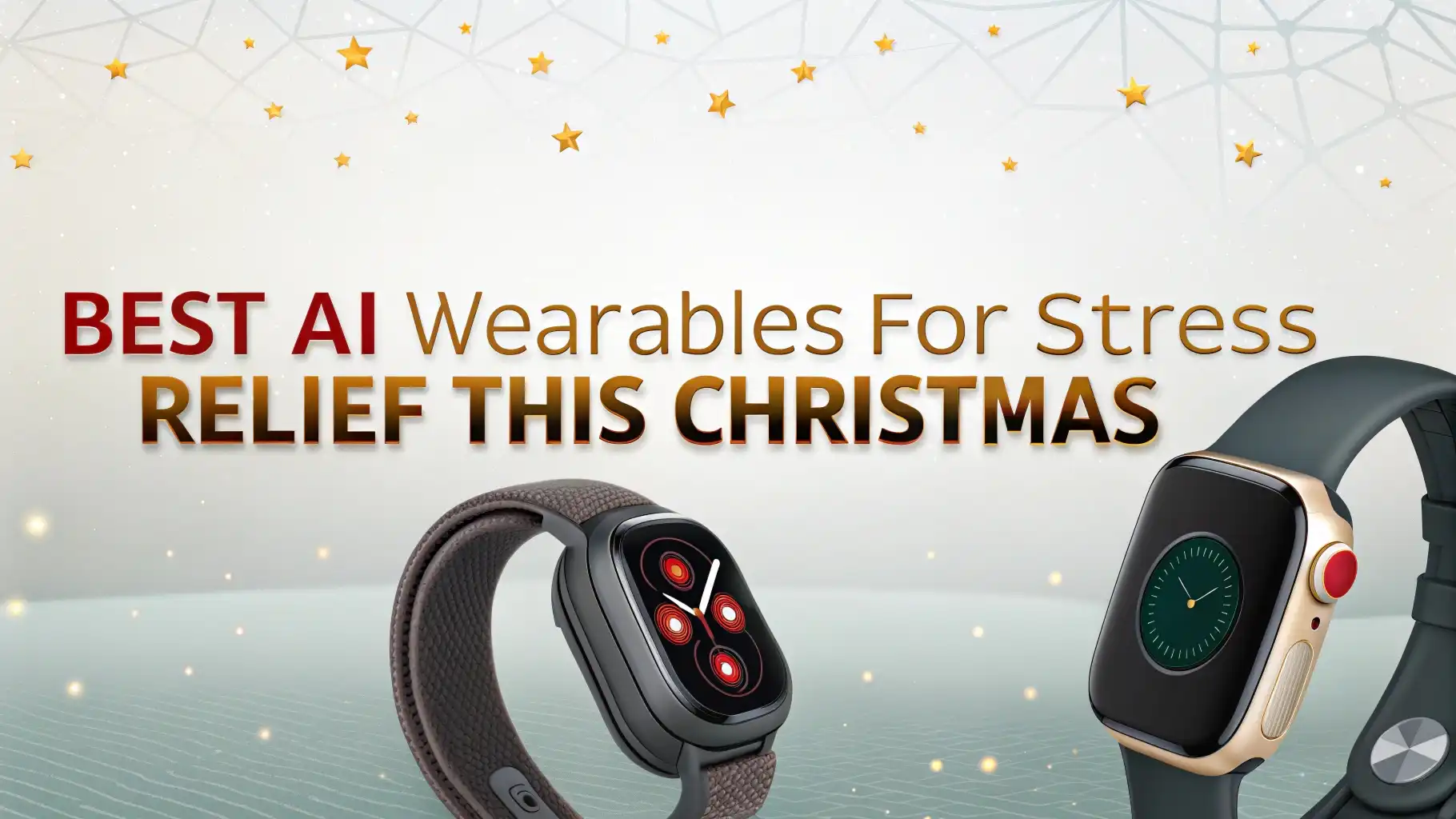
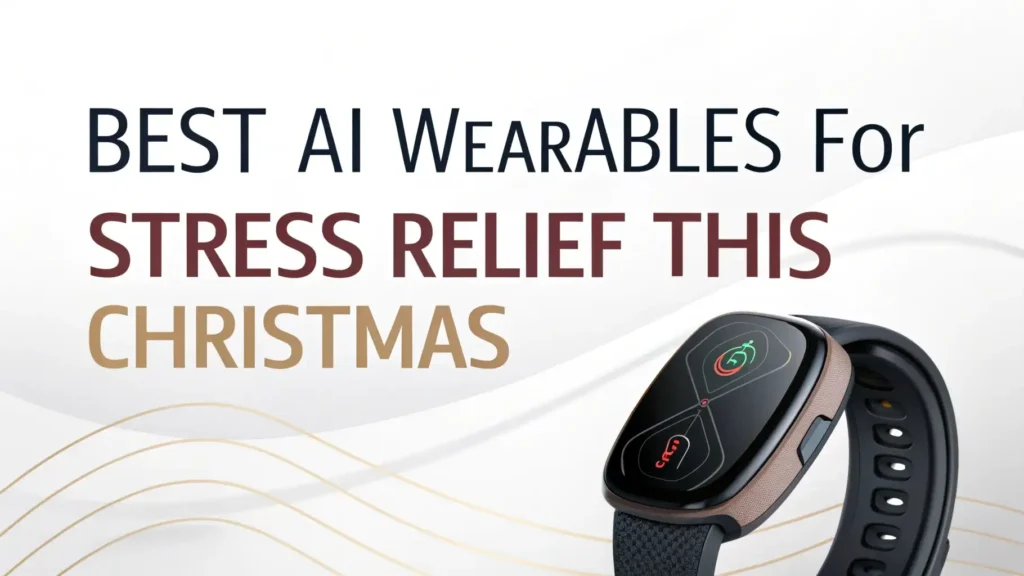
7 Best AI Wearables for Stress Relief This Christmas
The holiday season brings joy, but it also brings stress. Shopping marathons, family gatherings, and year-end deadlines can leave you feeling overwhelmed.
AI wearables have changed how we manage stress. These smart devices use advanced technology to monitor your body’s signals and help you find calm.
This Christmas, gift yourself or your loved ones the power of stress-free living. AI wearables track your heart rate, sleep patterns, and stress levels.
Key Takeaways:
- AI wearables combine health monitoring with stress management features. These devices track multiple health metrics including heart rate variability, sleep quality, and daily activity levels. The data helps you understand when stress affects your body most.
- Most devices require no subscription fees for basic stress tracking features. While premium features may cost extra, core stress monitoring functions work right out of the box. You get immediate value without ongoing monthly payments for standard features.
- Battery life ranges from 10 days to several weeks on a single charge. Modern AI wearables use efficient processors that maximize battery performance. You spend less time charging and more time tracking your wellness journey.
- Real-time stress monitoring helps you respond to anxiety before it escalates. Advanced sensors detect changes in your heart rate and provide instant alerts. You can practice breathing exercises or take breaks when your device notices rising stress levels.
- Most wearables sync with both iOS and Android smartphones seamlessly. Cross-platform compatibility means you can switch phones without losing your health data. The companion apps provide detailed insights and personalized recommendations.
- Prices vary from under $100 to over $400 depending on features and brand. Budget-friendly options offer excellent stress tracking capabilities. Premium devices include advanced AI features and longer battery life for power users.
Apollo Neuro Wearable: The Science-Backed Stress Relief Device

The Apollo Neuro stands out as a scientifically proven stress relief wearable. This device uses gentle vibrations to calm your nervous system. You wear it on your wrist or ankle, and it delivers soothing touch therapy throughout the day.
The technology behind Apollo Neuro comes from neuroscience research. The device sends low-frequency sound waves that your body feels but your ears cannot hear. These vibrations activate your parasympathetic nervous system, which controls your body’s relaxation response.
Apollo offers different vibration programs for various needs. The Energy and Wake Up mode helps you start your day alert. The Social and Open mode prepares you for gatherings. The Clear and Focused mode enhances concentration during work. The Calm and Recover mode helps you unwind after stressful events.
Pros:
- Backed by multiple clinical studies and research
- Silent vibrations work without disturbing others
- AI automatically schedules stress relief sessions
- Can be worn on wrist or ankle for comfort
- Improves heart rate variability and sleep quality
Cons:
- Higher price point compared to basic fitness trackers
- Requires smartphone app for full functionality
- Battery lasts about 6-8 hours of continuous use
- Takes time to learn optimal settings for your body
RingConn Gen 2 Air: Ultra-Thin Smart Ring for Discreet Monitoring

The RingConn Gen 2 Air brings AI-powered stress tracking to your finger. This ultra-thin smart ring weighs almost nothing yet packs powerful health sensors. You barely notice wearing it, making it perfect for people who dislike bulky wrist devices.
The ring monitors your stress levels through heart rate variability measurements. HRV indicates how well your body handles stress. Lower HRV means higher stress, while higher HRV suggests better stress management. The ring tracks this metric continuously throughout your day.
Battery life reaches an impressive 10 days on a single charge. You spend more time wearing the ring and less time plugging it in. The charging case is small enough to fit in your pocket or purse for travel convenience.
Pros:
- Ultra-thin design for comfortable all-day wear
- 10-day battery life reduces charging frequency
- No subscription fees for standard features
- Accurate sleep and stress tracking
- Compatible with both iOS and Android devices
Cons:
- Must order correct size (sizing kit recommended)
- Limited display means checking phone for details
- Not suitable for people with very small or large fingers
- Premium AI features require additional payment
Fitbit Inspire 3: Affordable Stress Management for Everyone

The Fitbit Inspire 3 delivers professional-grade stress management at an accessible price. This fitness tracker includes a dedicated stress management score that updates throughout your day. You see how your body responds to daily challenges.
Fitbit’s stress tracking uses heart rate variability and physical activity data. The device analyzes these metrics and assigns a stress management score from 1 to 100. Higher scores indicate better stress resilience. Lower scores suggest you need more rest and recovery time.
The Inspire 3 includes guided breathing exercises. When your stress levels rise, the tracker prompts you to practice mindfulness. Breathing sessions last 2 to 5 minutes and follow visual patterns on the screen. You match your breathing to the expanding and contracting circles displayed.
Pros:
- Affordable price under $100
- 10-day battery life for extended use
- Includes mindfulness and breathing exercises
- Tracks 20+ exercise modes automatically
- Free Fitbit app with detailed health insights
Cons:
- Small screen may be hard to read for some users
- Premium features require Fitbit Premium subscription
- No built-in GPS for route tracking
- Stress score updates only a few times daily
Oura Ring 4: Premium Smart Ring with Advanced AI

The Oura Ring 4 represents the premium tier of smart ring technology. This fourth-generation device includes the latest sensors for stress detection. The ring measures your body temperature, heart rate, and movement with exceptional accuracy.
Oura’s approach to stress tracking focuses on readiness and recovery scores. The ring analyzes your sleep quality, activity levels, and heart rate variability. Each morning, you receive a readiness score that tells you how prepared your body is for stress.
The redesigned sensors in Generation 4 improve accuracy by 30% compared to previous models. The ring detects subtle changes in your stress levels before you consciously notice them. Early detection allows proactive stress management instead of reactive responses.
Pros:
- Medical-grade sensors for accurate tracking
- Sleek design available in multiple finishes
- 7-day battery life with quick charging
- Detailed app insights and trends
- Tracks stress through multiple biometrics
Cons:
- Premium price point above $300
- Requires monthly membership for full features
- Sizing must be accurate for proper function
- Rose gold option costs more than silver
Samsung Galaxy Watch 7: AI-Powered Wellness Companion
![Samsung Galaxy Watch 7 44mm Bluetooth AI Smartwatch w/Energy Score, Wellness Tips, Heart Rate Tracking, Sleep Monitor, Fitness Tracker, 2024, Green [US Version, 1Yr Manufacturer Warranty]](https://gadgettales.blog/wp-content/plugins/aawp/public/image.php?url=YUhSMGNITTZMeTl0TG0xbFpHbGhMV0Z0WVhwdmJpNWpiMjB2YVcxaFoyVnpMMGt2TkRGUmVITnFTR1JDWWt3dVgxTk1NVFl3WHk1cWNHYz18MTc3NDc0ODE0Nw=)
The Samsung Galaxy Watch 7 brings comprehensive AI wellness tracking to your wrist. This smartwatch includes an Energy Score feature that evaluates your readiness for daily challenges. The score considers your stress levels, sleep quality, and physical activity.
Samsung’s advanced sensors track your heart rate continuously. The watch detects irregular heart rhythms and elevated stress indicators. When stress rises, you receive gentle alerts suggesting breathing exercises or short walks.
The watch includes guided meditation programs built into the Samsung Health app. These sessions range from 5 to 20 minutes and address different stress types. You choose programs for work stress, relationship anxiety, or general overwhelm.
Pros:
- Large AMOLED display for easy reading
- AI-powered energy and wellness tips
- Works independently without phone connection
- Comprehensive fitness and stress tracking
- Two-day battery life with moderate use
Cons:
- Best features require Samsung smartphone
- Larger size may feel bulky on small wrists
- Premium price for full-featured model
- Learning curve for all features
Garmin Venu Sq 2: Body Battery Energy Monitoring

The Garmin Venu Sq 2 introduces the innovative Body Battery feature for stress management. This metric shows your energy reserves throughout the day. Stress drains your body battery, while rest recharges it.
The watch tracks stress levels continuously using heart rate variability. You see your current stress level on a scale from 0 to 100. Higher numbers indicate greater stress, while lower numbers show relaxation. The visual display makes understanding your state simple.
Garmin includes relaxation breathing exercises in the watch interface. When your stress level climbs, the watch suggests taking a breathing break. The guided exercises help lower your stress score measurably within minutes.
Pros:
- Unique Body Battery energy tracking
- Up to 11 days of battery life
- Bright AMOLED display
- Affordable compared to premium smartwatches
- Includes 25+ sports apps
Cons:
- Smaller screen than round watch faces
- Limited third-party app selection
- No cellular connectivity option
- Stress tracking less detailed than premium models
Whoop 5.0: Professional-Grade Stress and Recovery Tracking

The Whoop 5.0 targets serious athletes and health enthusiasts who want professional-grade stress monitoring. This screenless band focuses entirely on data collection and analysis. You check all metrics through the smartphone app.
Whoop measures strain, recovery, and sleep with exceptional precision. The device calculates a daily strain score based on cardiovascular load. Higher strain requires more recovery time to maintain optimal stress resistance. The system helps you balance stress and rest perfectly.
Heart rate variability tracking runs continuously 24/7. Whoop analyzes HRV trends over weeks and months. You see how lifestyle changes affect your stress resilience over time. The long-term perspective reveals patterns invisible in daily snapshots.
Pros:
- Medical-grade accuracy for all metrics
- Screenless design for minimal distraction
- Continuous wear with battery pack system
- 14+ days battery life
- Detailed recovery and strain insights
Cons:
- Requires monthly membership after first year
- No display means checking phone constantly
- Higher overall cost with subscription
- Learning curve for interpreting metrics
Understanding How AI Wearables Reduce Stress
AI wearables use multiple sensors to track stress indicators. Heart rate variability serves as the primary stress measurement. HRV measures the time between heartbeats. Higher variability indicates better stress management capacity.
The devices also monitor skin temperature and movement patterns. Stress affects body temperature in subtle but measurable ways. Restless movement or reduced activity can signal rising stress levels. AI algorithms analyze these signals together for accurate assessments.
Machine learning improves accuracy over time. The wearable learns your personal baseline metrics. Your normal stress patterns differ from other users, and AI accounts for these individual differences. Personalized insights become more precise the longer you wear the device.
Real-time alerts help you respond quickly to rising stress. The device buzzes or displays a notification when stress spikes. You can practice breathing exercises immediately instead of letting stress build unchecked throughout the day.
Choosing the Right Wearable for Your Needs
Consider your primary stress relief goals before buying. Sleep-focused users benefit most from rings and screenless bands. These devices track sleep without the distraction of notifications. Wrist-based smartwatches offer more features but may disrupt sleep.
Budget affects your choices significantly. Entry-level fitness trackers under $100 provide solid stress tracking. Premium devices costing $300 or more include advanced AI features and better sensors. Assess which features you will actually use regularly.
Subscription requirements matter for long-term costs. Some devices require monthly memberships for full functionality. Others provide complete features without ongoing fees. Calculate the total cost of ownership over two years.
Battery life preferences vary by person. Frequent travelers prefer devices lasting 10+ days between charges. Daily chargers work fine for people with consistent routines. Consider your lifestyle when evaluating battery specifications.
Maximizing Stress Relief with Your Wearable
Wear your device consistently for the best results. AI algorithms need continuous data to provide accurate insights. Gaps in tracking lead to less reliable stress assessments. Make wearing your device as habitual as wearing your watch.
Review your stress data weekly instead of obsessing daily. Short-term fluctuations are normal and expected. Long-term trends reveal meaningful patterns. Schedule a weekly review session to analyze your progress.
Combine wearable data with lifestyle changes. The device shows what increases your stress, but you must take action. Reduce exposure to stress triggers when possible. Practice stress-reduction techniques the wearable recommends.
Share data with your healthcare provider if stress remains high. Chronic stress requires professional attention beyond wearable technology. Your device data helps doctors understand your stress patterns and recommend appropriate treatments.
The Science Behind Stress Tracking Technology
Wearable stress tracking relies on autonomic nervous system monitoring. Your nervous system has two modes: sympathetic (fight or flight) and parasympathetic (rest and digest). Stress activates sympathetic responses. Relaxation engages parasympathetic responses.
Heart rate variability reflects this balance between nervous system states. Higher HRV indicates better switching between sympathetic and parasympathetic modes. Good stress management shows as higher HRV numbers. Poor stress resilience appears as lower HRV.
Photoplethysmography sensors measure heart rate through skin. Light emitting diodes shine through your skin. Sensors detect blood flow changes with each heartbeat. AI algorithms calculate precise heart rate and HRV from these optical measurements.
Temperature sensors add context to stress measurements. Core body temperature drops during relaxation. Stress raises skin temperature measurably. Combining temperature data with heart metrics improves stress detection accuracy significantly.
Integrating Wearables into Your Holiday Routine
Start wearing your device before the holiday rush begins. Establish baseline measurements during calm periods. This baseline helps the AI recognize when holiday stress affects your body differently.
Set up stress alerts before attending holiday gatherings. Your wearable can remind you to take breaks during long family dinners. Brief breathing exercises between activities prevent stress from accumulating throughout the day.
Track your sleep quality during the holiday season. Late nights and irregular schedules disrupt sleep patterns. Poor sleep amplifies stress responses, creating a difficult cycle. Your wearable helps you prioritize rest when you need it most.
Use activity tracking to maintain healthy movement habits. Holiday travel and indoor gatherings reduce physical activity. Movement naturally reduces stress hormones. Your device reminds you to walk, stretch, or exercise even during busy holiday weeks.
Gift-Giving Guide: Which Wearable to Buy
For tech-enthusiasts: Choose the Samsung Galaxy Watch 7 or similar smartwatch. These devices combine stress tracking with comprehensive smart features. Recipients who love technology appreciate the advanced capabilities and AI integration.
For minimalists: Select the Oura Ring 4 or RingConn Gen 2 Air. Rings provide powerful tracking without the bulk of wrist devices. People who prefer subtle wearables enjoy the discreet design and accurate monitoring.
For budget-conscious buyers: Pick the Fitbit Inspire 3 as an excellent entry point. This tracker delivers solid stress management features at an accessible price. First-time wearable users get great value without overspending.
For serious health optimizers: Invest in the Whoop 5.0 or Apollo Neuro. These professional-grade devices provide the deepest insights and most precise tracking. Recipients focused on optimizing health and performance benefit most from advanced features.
Frequently Asked Questions
Do AI wearables really reduce stress or just measure it?
AI wearables both measure and help reduce stress actively. Devices like Apollo Neuro use vibrations to calm your nervous system directly. Most other wearables measure stress and suggest interventions. Guided breathing exercises, activity reminders, and sleep optimization all reduce stress when you follow the recommendations. The measurement alone increases awareness, which helps many users make better lifestyle choices. Think of wearables as both a thermometer and a thermostat for your stress levels.
Can I wear these devices while sleeping?
Yes, most AI wearables work best when worn during sleep. Sleep tracking provides crucial stress management data. Smart rings are most comfortable for overnight wear due to their minimal design. Wrist-based trackers work well if you find the weight acceptable. The Apollo Neuro can be worn on the ankle for sleep comfort. Good sleep tracking requires consistent overnight wear, so choose a device that feels comfortable for 8 hours.
How accurate are AI wearables compared to medical equipment?
Consumer AI wearables achieve impressive accuracy for continuous monitoring. Heart rate tracking typically shows 95% or higher accuracy compared to medical ECG equipment. Stress measurements correlate well with clinical assessments but are not diagnostic tools. Wearables excel at tracking trends and patterns over time. For medical diagnosis, always consult healthcare professionals. Use wearables as wellness tools, not medical devices.
Do I need a smartphone to use these wearables?
Most AI wearables require smartphones for initial setup and detailed insights. Basic functions like stress tracking work independently on some devices after setup. Smartwatches with cellular connectivity offer the most phone-free functionality. Smart rings and fitness bands need phone sync for accessing detailed data. Consider how often you want to check stress metrics when choosing your device.
How long before I see stress reduction results?
Most users notice initial benefits within one to two weeks of consistent use. The AI needs time to learn your baseline patterns and provide accurate personalized recommendations. Significant stress resilience improvements typically appear after four to six weeks. Consistent use matters more than device cost. Cheaper devices worn daily outperform expensive devices used sporadically. Commit to at least one month of regular use before evaluating effectiveness.
Are there any side effects from wearing AI stress relief devices?
AI wearables are generally safe with minimal side effects. Some users experience skin irritation from prolonged band contact. Switching wrist positions or using different band materials usually solves this issue. Devices using vibrations may feel uncomfortable initially. Most people adapt within a few days. The psychological dependency on checking stress scores concerns some experts. Use wearables as tools, not as sources of anxiety about your anxiety levels.